
Nature Bound

Lessons from the Spring Turkey Hunt

Lessons from the Spring Turkey Hunt

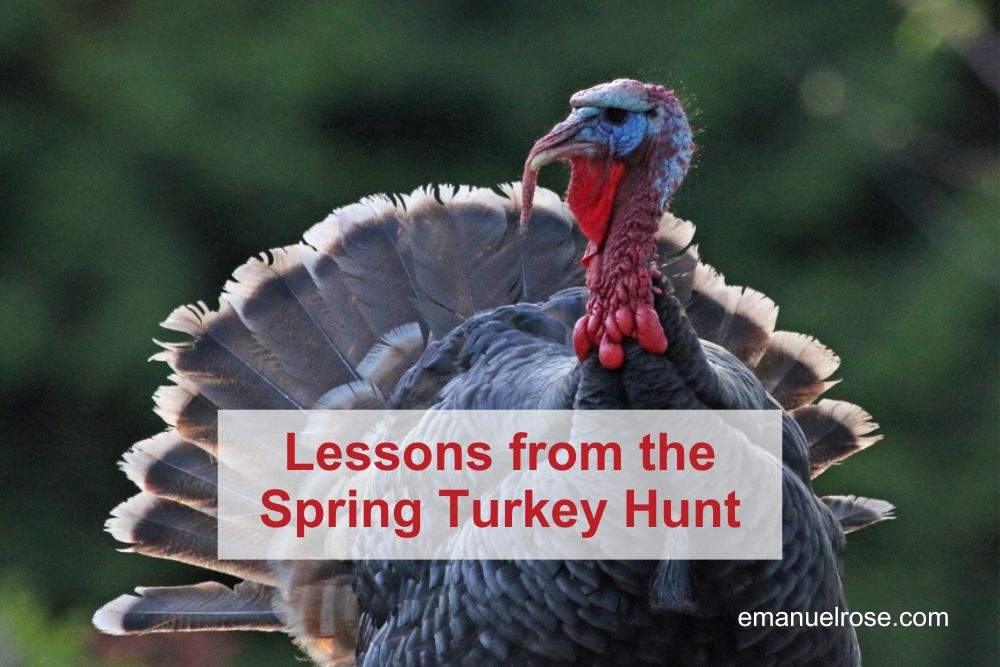
The spring turkey hunt is a time-honored tradition that combines skill, strategy, and patience. For those who take to the woods, fields, and mountains with hopes of bagging a turkey, it’s more than just a hunt – it’s a deep connection to the natural world and a reaffirmation of the timeless practice of providing food through one’s own effort. This year’s season has provided valuable insights into what makes a successful and memorable turkey hunt. The Allure of Turkey Hunting Turkey hunting may not be the first choice for many hunters initially, but once discovered, it often becomes a passion. It’s a pursuit that fills the gap left by other seasonal activities and offers a unique set of challenges and rewards. Many hunters find themselves deeply invested in this practice, appreciating the strategy and nuance needed to outsmart these highly perceptive birds. Observations from 2024: A Tale of Two Regions This year’s turkey hunting season presented unique challenges and observations. In the national forests, hunters must navigate vast expanses where predicting turkey behaviors remains elusive even after years of experience. Unpredictable weather and flock dynamics keep hunters on their toes, demanding constant adaptation and vigilance. In these areas, patterns observed in previous mild winters can offer some clues, but deviations are common, requiring hunters to remain flexible and observant. On private lands that have undergone extensive logging, the selective harvesting of large trees used as traditional roosting spots added a layer of complexity. The turkeys returned, drawn by the good habitat, but without a clear idea of where to roost, creating a new dynamic for hunters to understand and exploit. Patterns and Persistence A significant takeaway from this season is the varying migratory patterns of turkeys. In the case of free-range turkeys, these birds adjust their elevation throughout the season. They often start in the lower river bottoms and gradually move upwards as the snow melts. Successful hunting in these regions often hinges on finding key elements such as perennial water sources, flat ground, and areas with surrounding jack pines. Hunters must be prepared to constantly move and adapt to find the right elevation where the birds are active. In lower agricultural areas, the migratory distance tends to be smaller, but the principle remains the same. Understanding the seasonal behaviors and adjusting strategies accordingly is crucial. Despite these differences, the importance of grasping turkey behavior in their specific environments remains paramount for success. Adaptation: A Key to Success Adapting gear and strategies is essential for improving efficiency and success in turkey hunting. This year marked significant transformations in approaches for many hunters: Optics: Installing red dot reflex sights on shotguns can greatly improve accuracy and is particularly beneficial for new or inexperienced hunters. This adjustment can make the difference between a clear shot and a missed opportunity. Lighter Shotguns and Shooting Sticks: Switching to a lighter shotgun can ease the physical burden of long hunts. Additionally, using shooting sticks can help minimize movement and maintain readiness while calling and tracking turkeys solo. Bipod Shooting Sticks: These tools are invaluable for steadying a shot, especially when hunting alone. Using zero magnification red dot sights can ensure a clean, humane shot, making them an excellent choice for hunters of all experience levels. Memorable Moments and Takeaways Every turkey hunting season provides moments that stand out and teach valuable lessons. One memorable observation this year was the importance of patience and flexibility. Waiting until later in the morning to strike, rather than trying to capitalize on the roost early, can sometimes yield better results. This strategy takes into account the turkey’s daily activities and biological needs, aligning the hunter’s approach with the natural rhythms of the birds. Another significant takeaway was the unpredictable nature of turkey behavior. There were instances of unusual interactions with hens, which emphasized the need for patience and minimal movement. Such experiences underscore the importance of adapting tactics based on real-time observations and remaining persistent despite initial setbacks. Advice for Beginners For those new to turkey hunting, the following pieces of advice can prove invaluable: Persistence: Go out every day you can, regardless of weather conditions. Each day in the field is a new opportunity to learn and increase your chances of success. Scouting: Good scouting and a thorough understanding of the terrain are critical. Look for patterns, perennial water sources, and optimal nesting areas to guide your hunting efforts. Adaptability: Be prepared to alter your strategies based on what you observe. Whether it’s changing your calling techniques, modifying your gear, or adjusting your hunting times, flexibility is crucial. Movement: Keep moving and exploring different spots if you’re not seeing or hearing turkeys. Staying in one place too long without results can be a mistake; sometimes, you need to cover more ground to find the birds. Turkey hunting blends art and science, requiring knowledge, experience, and intuition. The 2024 season, with its unique challenges and learning moments, has reinforced the timeless bond between hunters and the natural world. A very special thank you to Mark Avolio and Jim Clark for their invaluable contributions to this blog. Their decades of experience, keen observations, and willingness to share rich personal anecdotes have provided both practical advice and deeper reflections that resonate with hunters of all levels. Their insights have enriched our understanding and appreciation of turkey hunting, preserving the essence of what makes it such a cherished tradition. Watch the Nature Bound Podcast Featuring Jim Clark and Mark Avolio: youtu.be/-v5CYuxZUxA

Lessons from the Spring Turkey Hunt Read More »

A Deep Dive into the Mysteries of Pyramid Lake

Nature’s Intricate Confluence Pyramid Lake, situated in the arid heartland of Nevada, stands as an awe-inspiring marvel of nature’s complexity and ingenuity. This lake, characterized by its saline waters, encapsulates a story of geological evolution, climate dynamics, and ecological resilience. Its existence challenges the boundaries of freshwater and saline ecosystems, bridging ancient histories with present-day ecological wonders. Let’s delve further into the phenomena that sculpt this natural masterpiece and the life it sustains. The Geological Ballet Behind Pyramid Lake’s Formation The origins of Pyramid Lake are emblematic of the vast climatic and geological shifts that have shaped the Great Basin over millennia. The dance between water and land, under the orchestration of climate, has left behind a saline oasis in what once was a vastly different landscape. This lake is a remnant of the ancient Lake Lahontan, a vast freshwater lake formed during the Pleistocene era’s glacial retreats.The processes that led to the formation of Pyramid Lake are a testament to the power of natural forces over time—water carving through earth, climate dictating the balance between evaporation and precipitation, and geology molding the basin that would capture Lake Lahontan’s last tears. The Symbiosis of Water and Desert The transition of the Truckee River’s fresh water into the saline embrace of Pyramid Lake exemplifies a meticulous balance—a symbiotic relationship between desert and water rarely observed elsewhere. This balance stems from the peculiar geography of the region, situated in the rain shadow of the majestic Sierra Nevada. The precipitation patterns, or rather the lack thereof, set the stage for the unique saline characteristics of the lake. The aridity envelops the area, ensuring that what little moisture finds its way here is zealously guarded and transformed by the landscapes it nurtures. Moreover, Pyramid Lake’s salinity is a product of an unending cycle of mineral deposition. Each droplet of water that enters the lake carries with it a history, a journey through the desert, picking up minerals and sediments along the way. Over countless cycles, these have accumulated to create a mineral-rich habitat, profoundly different from its origins yet inherently connected to the broader ecosystem of the region. The Echoes of Ancient Inhabitants: Fish of Pyramid Lake Among the most fascinating aspects of Pyramid Lake are its native fish populations, notably the Lahontan cutthroat trout. These fish are living history, echoes of a time when Pyramid Lake’s waters were part of the vast, interconnected waterways of ancient Lake Lahontan. Their story is one of adaptation and survival, of evolving to thrive in conditions markedly different from those of their ancestors. The cutthroat trout of Pyramid Lake, now adjusting to its saline waters, serve as a sterling example of ecological resilience and adaptation. These species have navigated the tumultuous waters of change, enduring as sentinels of the lake’s historic past and present complexity. Their adaptation to saline conditions is not just a story of survival but a narrative about ecological niches and the intricate balance within ecosystems. As remnants of a Pleistocene ecosystem, these fish remind us of the profound interconnections between climate cycles, geological transformations, and biological evolution. Reflecting on Pyramid Lake’s Significance Pyramid Lake extends an invitation to ponder the delicate interplay between water, land, and life. It is a natural laboratory, where lessons about resilience, adaptability, and the raw power of natural processes are etched in its waters and the life it supports. With its saline character and unique ecosystem, this lake offers not just a window into the past but a mirror reflecting the challenges and opportunities of contemporary ecological conservation. In understanding and appreciating the nuances of Pyramid Lake, we learn more about the dynamics of desert ecosystems, the importance of preserving natural habitats, and the enduring legacy of nature’s ability to adapt and thrive in the face of change.In essence, Pyramid Lake embodies the resilience of nature, its capacity for transformation, and its ceaseless march through time—a reminder of the earth’s primal beauty and complexity, urging us to look deeper, to understand more, and to marvel at the wondrous intricacies of our natural world. I sincerely thank John Aubert for his significant contribution to this blog.

A Deep Dive into the Mysteries of Pyramid Lake Read More »

Shopping Cart